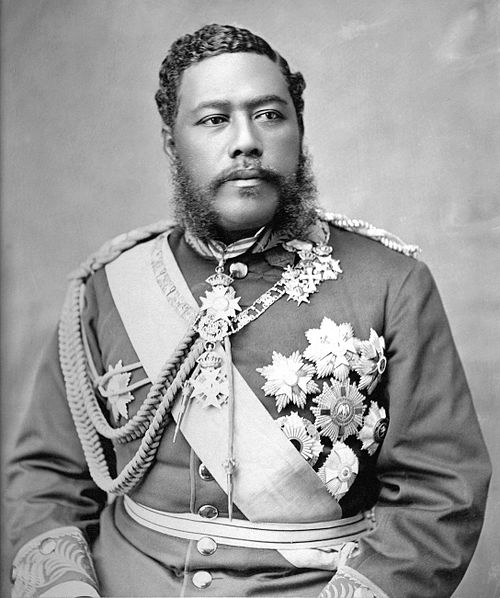
About Kalākaua
Kalākaua (David Laʻamea Kamanakapuʻu Māhinulani Nālaʻiaʻehuokalani Lumialani Kalākaua; November 16, 1836 – January 20, 1891), was the last king and penultimate monarch of the Kingdom of Hawaiʻi, reigning from February 12, 1874, until his death in 1891. Succeeding Lunalilo, he was elected to the vacant throne of Hawaiʻi against Queen Emma. Kalākaua was known as the Merrie Monarch for his convivial personality – he enjoyed entertaining guests with his singing and ukulele playing. At his coronation and his birthday jubilee, the hula, which had hitherto been banned in public in the kingdom, became a celebration of Hawaiian culture. During Kalākaua's reign, the Reciprocity Treaty of 1875 brought great prosperity to the kingdom. Its renewal continued the prosperity but allowed United States to have exclusive use of Pearl Harbor. In 1881, Kalākaua took a trip around the world to encourage the immigration of contract sugar plantation workers. He wanted Hawaiians to broaden their education beyond their nation. He instituted a government-financed program to sponsor qualified students to be sent abroad to further their education. Two of his projects, the statue of Kamehameha I and the rebuilding of ʻIolani Palace, were expensive endeavors but are popular tourist attractions today. Extravagant expenditures and Kalākaua's plans for a Polynesian confederation played into the hands of annexationists who were already working toward a United States takeover of Hawaiʻi. In 1887, Kalākaua was pressured to sign a new constitution that made the monarchy little more than a figurehead position. After his brother William Pitt Leleiohoku II died in 1877, the king named their sister Liliʻuokalani as heir-apparent. She acted as regent during his absences from the country. After Kalākaua's death, she became the last monarch of Hawaiʻi. In the army, Kalākaua served as first lieutenant in his father Kapaʻakea's militia of 240 men and later worked as military secretary to Major John William Elliott Maikai, the adjutant general of the army. At the school, Kalākaua became fluent in English and the Hawaiian language and was noted for his fun and humor rather than his academic prowess. He became a personal associate and friend of Prince Lot, the future Kamehameha V, who instilled his mission of "Hawaiʻi for Hawaiians" in the young Kalākaua.
Biography source: Wikipedia. The profile adds birthday-specific historical context from the Celebs Birthday Today editorial database.