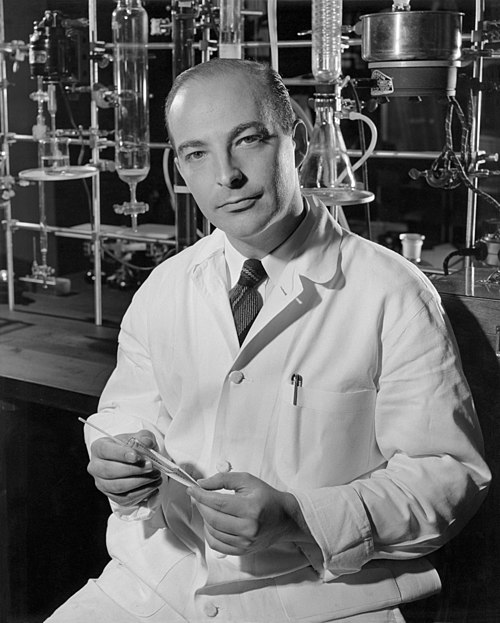
About Arthur Kornberg
Arthur Kornberg (March 3, 1918 – October 26, 2007) was an American biochemist who won the Nobel Prize in Physiology or Medicine in 1959 for the discovery of "the mechanisms in the biological synthesis of ribonucleic acid and deoxyribonucleic acid" together with Spanish biochemist and physician Severo Ochoa of New York University. He was also awarded the Paul-Lewis Award in Enzyme Chemistry from the American Chemical Society in 1951, an L.H.D. degree from Yeshiva University in 1962, and the National Medal of Science in 1979. In 1991, Kornberg received the Golden Plate Award of the American Academy of Achievement and the Gairdner Foundation Award in 1995. Kornberg's primary research interests were in biochemistry, especially enzyme chemistry, deoxyribonucleic acid synthesis (DNA replication) and studying the nucleic acids which control heredity in animals, plants, bacteria and viruses. Arthur Kornberg was educated first at Abraham Lincoln High School and then at City College of New York. The results were published in Kornberg's first research paper in 1942. The feeding of rats was boring work, and Kornberg became fascinated by enzymes.
Biography source: Wikipedia. The profile adds birthday-specific historical context from the Celebs Birthday Today editorial database.