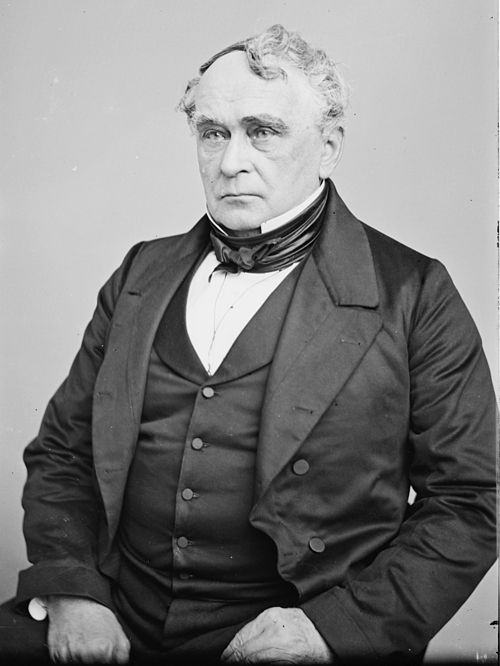
About Francis Lieber
Francis Lieber (German: [ˈliːbɐ]; born Franz Lieber; 18 March 1798 – 2 October 1872) was a German and American jurist and political philosopher. He is best known for the Lieber Code, the first modern codification of the customary law and the laws of war for battlefield conduct, which served as a basis for the Hague Conventions of 1899 and 1907 and for the later Geneva Conventions. He was also a pioneer in the fields of law, political science, and sociology in the United States. Born in Berlin, Prussia, to a Jewish merchant family, Lieber served in the Prussian Army during the Wars of Liberation against Napoleon Bonaparte. He obtained a doctorate from the University of Jena in 1820. A republican, he volunteered to fight on the Greek side in the Greek War of Independence in 1821. After experiencing repression in Prussia for his political views, he emigrated to the United States in 1827. During his early years in America, he worked a number of jobs, including swimming and gymnastics instructor, editor of the first editions of the Encyclopaedia Americana, journalist, and translator. Lieber wrote a plan of education for the newly founded Girard College and lectured at New York University before becoming a tenured professor of history and political economy at the University of South Carolina in 1835. In 1857, he joined the faculty at Columbia University where he assumed the chair of history and political science in 1858. He transferred to Columbia Law School in 1865 where he taught until his death in 1872. Lieber was commissioned by the U.S. Army to write the Instructions for the Government of the Armies of the United States in the Field (General Orders No. 100, 24 April 1863), the Lieber Code of military law that governed the battlefield conduct of the Union Army during the American Civil War (1861–1865). The Lieber Code was the first codification of the customary law and the laws of war governing the battlefield conduct of an army in the field, and later was a basis for the Hague Conventions of 1899 and 1907 and for the Geneva Conventions.
Biography source: Wikipedia. The profile adds birthday-specific historical context from the Celebs Birthday Today editorial database.