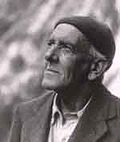
About Thomas Graham Brown
Thomas Graham Brown FRS (usually known as T. Graham Brown; 27 March 1882 – 28 October 1965) was a Scottish mountaineer and physiologist, most famous for finding three new routes up the east face of Mont Blanc. == Life and academic work == Graham Brown was born in Edinburgh on 27 March 1882. His father, Dr John Joseph Graham Brown was a President of the Royal College of Physicians of Edinburgh from 1912 to 1914. His mother was Jane Pasley Hay Thorburn. The family lived at 63 Castle Street in Edinburgh's New Town. Thomas studied science and medicine at the University of Edinburgh, gaining an MD in 1912 with a thesis on the rhythmic movement of decerebrate animals, followed in 1914 with a DSc from the same institution for a thesis on immediate and successive effects of compound stimulation in spinal preparations, before moving to Glasgow and Liverpool. Although his work was largely ignored for many years, he was the first to propose a half-centre model of motor neurons in which two groups of spinal neurons that are both reciprocally organized and mutually inhibiting are capable of producing basic rhythmic movement. His theory reflects today's widely accepted concept of central pattern generators in motor neurons. However, at the time, his views opposed those of his mentor, Sir Charles Scott Sherrington, who believed that the locomotor movements observed in decerebrate animals were caused by a chain of reflexes initiated by proprioception feedback. By contrast, Brown's research demonstrated that in the absence of cutaneous and proprioceptive signals, deafferented animals were still capable of generating alternating muscular rhythms.
Biography source: Wikipedia. The profile adds birthday-specific historical context from the Celebs Birthday Today editorial database.