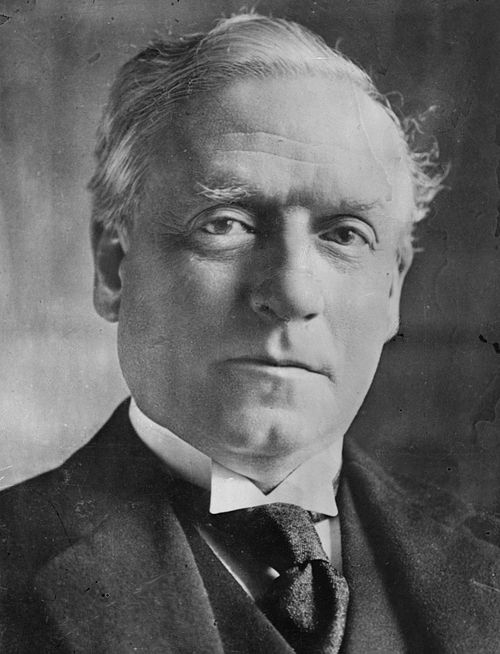
About H. H. Asquith
Herbert Henry Asquith, 1st Earl of Oxford and Asquith (12 September 1852 – 15 February 1928), was a British statesman, Liberal politician and barrister who was Prime Minister of the United Kingdom from 1908 until his resignation in 1917. Having served as Leader of the Opposition from 1920 to 1922, Asquith was the last member of the Liberal Party to do so, and the last prime minister from the Party to command a majority government, which he had inherited from Henry Campbell-Bannerman. His government enacted major Liberal reforms and curtailed the power of the House of Lords. In 1914 Asquith led the United Kingdom and the British Empire into the First World War. During 1915 his government was vigorously attacked for a shortage of munitions and the failure of the Gallipoli Campaign. After serving as Home Secretary under William Ewart Gladstone and Chancellor of the Exchequer under Henry Campbell-Bannerman, Asquith succeeded Campbell-Bannerman as prime minister in 1908. After the House of Lords rejected the People's Budget in 1909, Asquith fought two general elections in 1910 before securing passage of the Parliament Act 1911, which greatly reduced the Lords' power to block legislation. His unsuccessful attempts to introduce Irish Home Rule provoked repeated crises that led to gun running and violence, verging on civil war. The outbreak of World War I suspended political conflicts over Irish Home Rule and women's suffrage. Asquith oversaw Britain's mobilisation for war, including the deployment of the British Expeditionary Force and the expansion of military and industrial production. Military setbacks led him to form a coalition government in 1915 with the Labour and Conservative Parties, but criticism of his leadership continued to grow. He was weakened by his own indecision over strategy, conscription and financing. David Lloyd George replaced him as prime minister in December 1916, and the two subsequently fought for control of the declining Liberal Party. Historians have praised his role in the Liberal reforms of 1906–1911, which laid the foundations of the modern British welfare state, but criticise his leadership during the First World War. He had the longest continuous term as prime minister between 1827 and 1979, serving more than eight consecutive years. In August 1914 Asquith took the United Kingdom of Great Britain and Ireland and the British Empire into the First World War. Asquith called an election for January 1910, and the Liberals won, though they were reduced to a minority government. In the decade of opposition that followed, Asquith became a major figure in the party, and when the Liberals regained power under Sir Henry Campbell-Bannerman in 1905, Asquith was named Chancellor of the Exchequer.
Biography source: Wikipedia. The profile adds birthday-specific historical context from the Celebs Birthday Today editorial database.