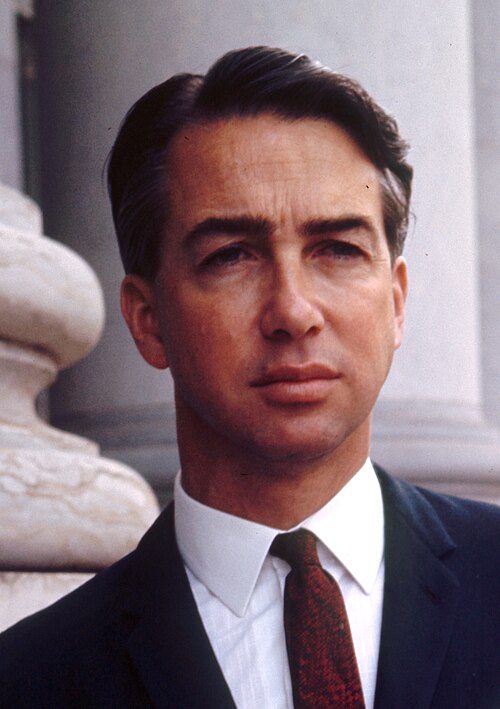
About Don Dunstan
Donald Allan Dunstan (21 September 1926 – 6 February 1999) was an Australian politician who served as the 35th premier of South Australia from 1967 to 1968, and again from 1970 to 1979. He was a member of the House of Assembly (MHA) for the division of Norwood from 1953 to 1979, and leader of the South Australian Branch of the Australian Labor Party from 1967 to 1979. Before becoming premier, Dunstan served as the 38th attorney-general of South Australia and the treasurer of South Australia. He is the fourth longest serving premier in South Australian history. In the late 1950s, Dunstan became well known for his campaign against the death penalty being imposed on Max Stuart, who was convicted of rape and murder of a small girl, opposing then-Premier Thomas Playford over the matter. During Labor's time in opposition, Dunstan was prominent in securing some reforms in Aboriginal rights and in Labor abandoning the White Australia policy. Dunstan became Attorney-General after the 1965 election, and replaced the older Frank Walsh as premier in 1967. Despite maintaining a much larger vote over the Liberal and Country League (LCL), Labor lost two seats at the 1968 election, with the LCL forming government with support of an independent. Dunstan responded by increasing his attacks on the Playmander, convincing the LCL into watering down the malapportionment. With little change in Labor's vote but with the Playmander removed, Labor won 27 of 47 seats at the 1970 election, and again in 1973, 1975, and 1977. Dunstan's socially progressive administration saw Aboriginal land rights recognised, homosexuality decriminalised, the first female judge (Dame Roma Mitchell) appointed, the first non-British governor, Sir Mark Oliphant, and later the first Indigenous governor, Sir Douglas Nicholls. He enacted consumer protection laws, reformed and expanded the public education and health systems, abolished the death penalty, relaxed censorship and drinking laws, created a ministry for the environment, enacted anti-discrimination law, and implemented electoral reforms such as the overhaul of the Legislative Council, the upper house of Parliament, lowered the voting age to 18, enacted universal suffrage, and completely abolished malapportionment. He also established Rundle Mall, enacted measures to protect buildings of historical heritage, and encouraged arts, with support for the Adelaide Festival Centre, the State Theatre Company, and the establishment of the South Australian Film Corporation. At the same time, there were also problems; the economy began to stagnate, and the large increases to burgeoning public service generated claims of waste. One of Dunstan's pet projects, a plan to build a new city at Monarto to alleviate urban pressures in Adelaide, was abandoned when economic and population growth stalled, with much money and planning already invested. After four consecutive election wins, Dunstan's administration began to falter in 1978 following his dismissal of Police Commissioner Harold Salisbury, as controversy broke out over whether he had improperly interfered with a judicial investigation. In addition, policy problems and unemployment began to mount, as well as unsubstantiated rumours of corruption and personal impropriety. The strain on Dunstan was increased by the death of his wife. His resignation from the premiership and politics in 1979 was abrupt after collapsing due to ill health, but he lived for another 20 years, remaining a vocal and outspoken campaigner for progressive social policy. He won a scholarship in classical studies and attended St Peter's College, a traditional private school for the sons of the Adelaide establishment.
Biography source: Wikipedia. The profile adds birthday-specific historical context from the Celebs Birthday Today editorial database.