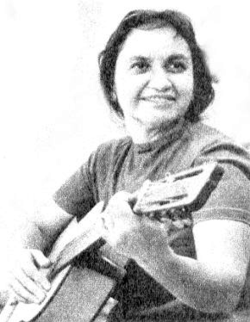
About Violeta Parra
Violeta del Carmen Parra Sandoval (Spanish pronunciation: [bjoˈleta ˈpara]; 4 October 1917 – 5 February 1967) was a Chilean composer, singer-songwriter, folklorist, ethnomusicologist and visual artist. She pioneered the Nueva Canción Chilena (The Chilean New Song), a renewal and a reinvention of Chilean folk music that would extend its sphere of influence outside Chile. Her birthdate (4 October) was chosen as "Chilean Musicians' Day." In 2011, Andrés Wood directed a biopic about her, titled Violeta Went to Heaven (Spanish: Violeta se fue a los cielos). == Early life == There is some uncertainty as to exactly where Violeta Parra was born. The stamp on her birth certificate says she was born in San Carlos, Ñuble Province, a small town in southern Chile on 4 October 1917, as Violeta del Carmen Parra Sandoval. However, both the Violeta Parra Foundation (Fundación Violeta Parra) and the Violeta Parra Museum (Museo Violeta Parra) state on their websites that she was born in San Fabián de Alico, 40 km from San Carlos. Violeta Parra was one of nine children in the prolific Parra family. Her father, Nicanor Parra Alarcón, was a music teacher. Her mother, Clarisa Sandoval Navarrete had grown up in the countryside and was a seamstress. She sang and played the guitar, and taught Violeta and her siblings traditional folk songs.
Biography source: Wikipedia. The profile adds birthday-specific historical context from the Celebs Birthday Today editorial database.