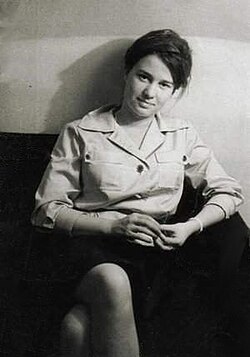
About Ulrike Meinhof
Ulrike Marie Meinhof (German pronunciation: [ʊlˈʁiːkə maˈʁiː ˈmaɪnhoːf]; 7 October 1934 – 9 May 1976) was a German left-wing militant, journalist, author and founding member of the Red Army Faction (RAF) in West Germany, commonly referred to in the press as the "Baader-Meinhof gang". She is the reputed author of The Urban Guerilla Concept (1971). The manifesto acknowledges the RAF's "roots in the history of the student movement"; condemns "reformism" as "a brake on the anti-capitalist struggle"; and invokes Mao Zedong to define "armed struggle" as "the highest form of Marxism-Leninism". Meinhof, who took part in the RAF's "May Offensive" in 1972, was arrested that June and spent the rest of her life in custody, largely isolated from outside contact. In November 1974, she was sentenced to 8 years in prison for complicity in a near-fatal shooting in what had been her first RAF operation, the successful jailbreak of Andreas Baader in 1970. From 1975, with Baader and two other RAF leaders, Gudrun Ensslin and Jan-Carl Raspe, she stood trial on further charges of murder and attempted murder. Before the end of the trial, she was found hanged in her cell in the Stammheim Prison. The official finding of suicide sparked controversy, with her sister, Wienke Zitzlaff, stating that Meinhof had told her only days before her death: "You can stand up and fight only while you are alive. If they say I committed suicide, be sure that it was murder." One year later, on 7 April 1977, two members of the RAF assassinated the Federal Attorney-General Siegfried Buback as revenge. Two women in Ensslin's group, along with a man with a criminal record (hired because of his supposed experience with armed encounters) broke into the institute. Meinhof eventually became the spokeswoman of the local Anti-Atomtod-Ausschuss (Anti Atomic-Death Committee). During this period, Meinhof wrote or recorded many of the manifestos and tracts for the RAF.
Biography source: Wikipedia. The profile adds birthday-specific historical context from the Celebs Birthday Today editorial database.