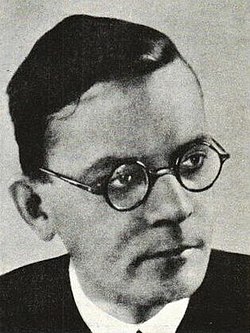
About Hans Fallada
Hans Fallada was a German writer of the first half of the 20th century. Some of his better known novels include Little Man, What Now? (1932) and Every Man Dies Alone (1947). His works belong predominantly to the New Objectivity literary style, a style associated with an emotionless reportage approach, with precision of detail, and a veneration for 'the fact'. Fallada's pseudonym derives from a combination of characters found in Grimms' Fairy Tales: The titular protagonist of Hans in Luck, and Fallada the magical talking horse in The Goose Girl. Hans Fallada (German:; born Rudolf Wilhelm Friedrich Ditzen; 21 July 1893 – 5 February 1947) was a German writer of the first half of the 20th century. In 1899, when Fallada was 6, his father relocated the family to Berlin following the first of several promotions he would receive. Fallada had a very difficult time upon first entering school in 1901. While in a sanatorium Fallada took to translation and poetry, albeit unsuccessfully, before finally breaking ground as a novelist in 1920 with the publication of his first book Der junge Goedeschal ("Young Goedeschal").
Biography source: Wikipedia. The profile adds birthday-specific historical context from the Celebs Birthday Today editorial database.