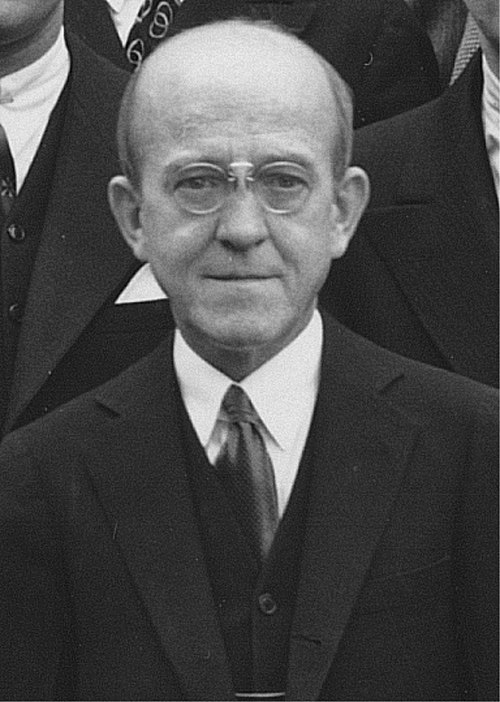
About Oswald Avery
Oswald Theodore Avery Jr. (October 21, 1877 – February 20, 1955) was a Canadian-American physician and medical researcher. The major part of his career was spent at the Rockefeller Hospital in New York City. Avery was one of the first molecular biologists and a pioneer in immunochemistry, but he is best known for the experiment (published in 1944 with his co-workers Colin MacLeod and Maclyn McCarty) that isolated DNA as the material of which genes and chromosomes are made. The Nobel laureate Arne Tiselius said that Avery was the most deserving scientist not to receive the Nobel Prize for his work, though he was nominated for the award throughout the 1930s, 1940s, and 1950s. The lunar crater Avery was named in his honor. He discovered a way to make thin paper that could be printed on both sides. Ernest became sick and did not continue, but Oswald pushed onward. Avery was one of the first molecular biologists and a pioneer in immunochemistry, but he is best known for the experiment that isolated DNA as the material of which genes and chromosomes are made.
Biography source: Wikipedia. The profile adds birthday-specific historical context from the Celebs Birthday Today editorial database.