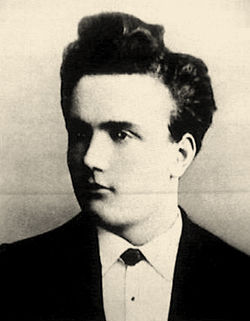
About Paul Gottlieb Nipkow
Paul Julius Gottlieb Nipkow (German: [ˈpaʊl ˈgɔtliːp ˈnɪpkoː]; 22 August 1860 – 24 August 1940) was a German electrical engineer and inventor. He invented the Nipkow disk, which laid the foundation of television, since his disk was a fundamental component in the first televisions. Hundreds of stations experimented with television broadcasting using his disk in the 1920s and 1930s, until it was superseded by all-electronic systems in the 1940s. Nipkow has been called the "father of television", together with other early figures of television history like Karl Ferdinand Braun. The first regular television service in the world, Fernsehsender Paul Nipkow, was named in his honour. == Beginnings == Nipkow was born in Lauenburg (now Lębork) in the Prussian province of Pomerania, now part of Poland. While at school in neighbouring Neustadt (now Wejherowo), in the province of West Prussia, Nipkow experimented in telephony and the transmission of moving pictures. After graduation, he went to Berlin in order to study science. He studied physiological optics with Hermann von Helmholtz, and electro-physics with Adolf Slaby. == Nipkow disk == While still a student he conceived an "electric telescope", mainly known for the idea of using a spiral-perforated disk (Nipkow disk), to divide a picture into a linear sequence of points.
Biography source: Wikipedia. The profile adds birthday-specific historical context from the Celebs Birthday Today editorial database.