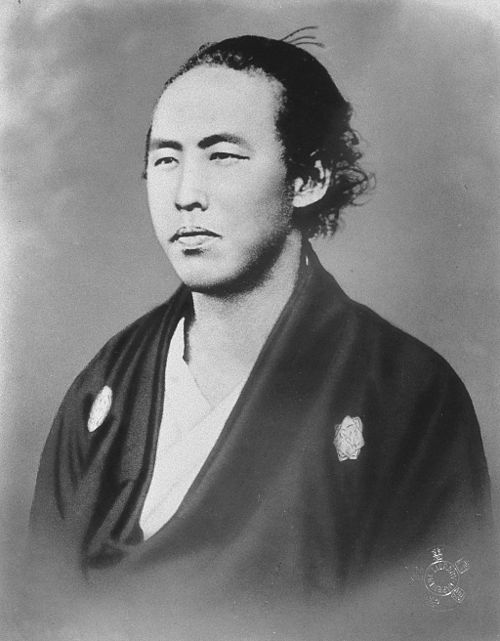
About Sakamoto Ryōma
Sakamoto Ryōma (坂本龍馬 or 坂本竜馬; 3 January 1836 – 10 December 1867) was a Japanese samurai, a shishi and influential figure of the Bakumatsu, and establishment of the Empire of Japan in the late Edo period. Sakamoto was a low-ranking samurai from the Tosa Domain on Shikoku and became an active opponent of the Tokugawa Shogunate after the end of Japan's sakoku isolationist policy. Under the alias Saitani Umetarō (才谷梅太郎), he worked against the Bakufu, the government of the Tokugawa shogunate, and was often hunted by their supporters and the Shinsengumi. Sakamoto advocated for democracy, Japanese nationalism, return of power to the Imperial Court, abolition of feudalism, and moderate modernization and industrialization of Japan. Sakamoto successfully negotiated the Satchō Alliance between the powerful rival Chōshū and Satsuma domains and united them against the Bakufu. Sakamoto was assassinated in December 1867 with his companion Nakaoka Shintarō, shortly before the Boshin War and the Meiji Restoration. Sakamoto enrolled as a student at the famous Hokushin Ittō-ryū Hyōhō Chiba-Dōjō, which was led by its first Headmaster Chiba Sadakichi Masamichi at that time. Sakamoto founded the private navy and trading company Kameyama Shachū in Nagasaki City with the help of the Satsuma, which later became kaientai or Ocean Support Fleet. Sakamoto became a shihan at the Chiba-Dōjō and taught Kenjutsu to the students together with Chiba Jūtarō Kazutane, in whom he found a close friend.
Biography source: Wikipedia. The profile adds birthday-specific historical context from the Celebs Birthday Today editorial database.