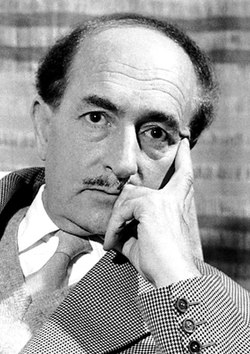
About Salvatore Quasimodo
Salvatore Quasimodo (Italian: [salvaˈtoːre kwaˈziːmodo]; 20 August 1901 – 14 June 1968) was an Italian poet and translator, awarded the 1959 Nobel Prize in Literature "for his lyrical poetry, which with classical fire expresses the tragic experience of life in our own times". Along with Giuseppe Ungaretti and Eugenio Montale, he was one of the foremost Italian poets of the 20th century. == Biography == Quasimodo was born in Modica, Sicily, into a Sicilian-Greek family. His paternal grandmother, Rosa (née Papandreou), was from Patras, Greece. Quasimodo integrated both of his ancestries in his works, in which he defined himself as a "Siculo-Greco" (lit. 'Sicilian-Greek'). In his biography for Elio Filippo Accrocca, he even sought to relocate his birthplace to Syracuse, the most notable city of Magna Graecia, instead of Modica, where he was actually born. Quasimodo spent his childhood in Roccalumera. In 1908 his family moved to Messina, as his father had been sent there to help the local population struck by a devastating earthquake. The impressions of the effects of natural forces would have a great impact on the young Quasimodo. In 1919 he graduated from the local Technical College.
Biography source: Wikipedia. The profile adds birthday-specific historical context from the Celebs Birthday Today editorial database.