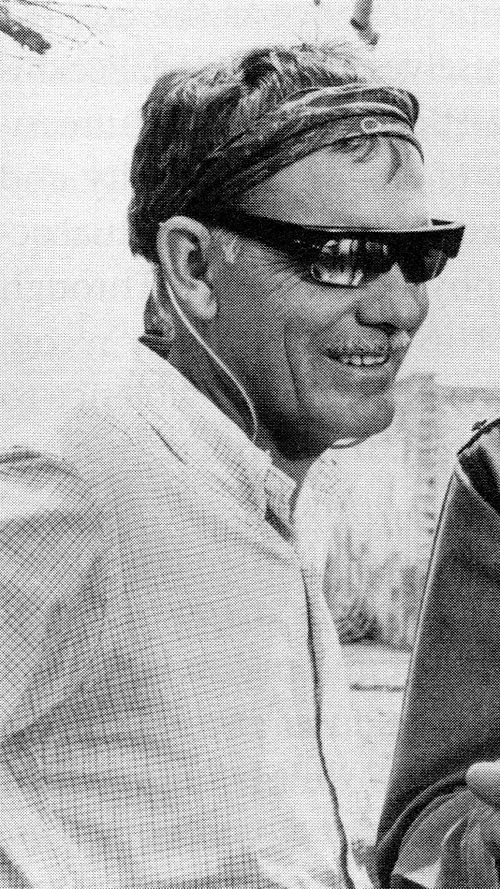
Portrait of Sam Peckinpah

Birthday profile

Sam Peckinpah

Sam Peckinpah, American director and screenwriter (died 1984)

Born
February 21, 1925
Died
December 28, 1984
Zodiac sign
Pisces
Birth year
1925

About Sam Peckinpah

David Samuel Peckinpah (; February 21, 1925 – December 28, 1984) was an American filmmaker and actor. He was known for his revisionist approach to the Western genre, employing a visually innovative and explicit depiction of action and violence. His 1969 film The Wild Bunch received two Academy Award nominations and was ranked No. 80 on the American Film Institute's Top 100 list. His other notable films included Ride the High Country (1962), Major Dundee (1965), The Ballad of Cable Hogue (1970), Straw Dogs (1971), The Getaway (1972), Pat Garrett and Billy the Kid (1973), Bring Me the Head of Alfredo Garcia (1974), Cross of Iron (1977), and Convoy (1978). Peckinpah was also known for his contributions to the television series The Rifleman (1958–63) and The Westerner (1960). Peckinpah's films deal with the conflict between values and ideals, as well as the corruption and violence in human society. His characters are often loners or losers who desire to be honorable but are forced to compromise in order to survive in a world of nihilism and brutality. He was given the nickname "Bloody Sam" owing to the violence in his films. His combative personality, along with years of alcohol and drug abuse, affected his professional legacy. The production of many of his films included battles with producers and crew members, damaging his reputation and career during his lifetime. A drama major, Selland introduced Peckinpah to the theater department and he became interested in directing for the first time. His writing led to directing, and he directed a 1958 episode of Broken Arrow (generally credited as his first official directing job) and several 1960 episodes of Klondike, (co-starring James Coburn, L. His 1969 Western epic The Wild Bunch received two Academy Award nominations and was ranked No. 80 on the American Film Institute's Top 100 list.

Biography source: Wikipedia. The profile adds birthday-specific historical context from the Celebs Birthday Today editorial database.

Sam Peckinpah timeline

  1. His writing led to directing, and he directed a 1958 episode of Broken Arrow (generally credited as his first official directing job) and several 1960 episodes of Klondike, (co-starring James Coburn, L.
  2. His 1969 Western epic The Wild Bunch received two Academy Award nominations and was ranked No. 80 on the American Film Institute's Top 100 list.

The world when Sam Peckinpah was born

Sam Peckinpah was born in 1925. The year snapshot below places that birthday in its cultural and historical setting: the music and films people were following, the headlines shaping public life, and the everyday prices families encountered.

Culture in 1925

  • #1 song"Sweet Georgia Brown"
  • Top movieThe Gold Rush (Charlie Chaplin)
  • Best-selling bookThe Great Gatsby – F. Scott Fitzgerald

Headlines and milestones

  • Major sports momentRed Grange signs with the Chicago Bears
  • Top headlineThe Scopes Trial captivates America
  • Technology milestoneTelevision demonstrated by John Logie Baird
  • Defining fadCharleston dance craze
  • Notable inventionMasking tape
  • World population1.98 billion

United States snapshot

  • U.S. leaderCalvin Coolidge
  • Sports championPittsburgh Pirates (World Series)
  • U.S. population115.8M

1925 versus 2026

These figures put everyday life in Sam Peckinpah's birth year beside the site's latest United States snapshot.

Measure19252026
Gas$0.22$3.45/gal
Average home$5,900$435,000
Average income$3,600$67,500
Movie ticket$0.25$11.95
Postage stamp$0.02$0.73
Population115.8M341 million

Sources and editorial standards

This profile combines a biographical source with structured birthday and historical context. Sources recorded for this profile: Wikipedia, IMDb, Wikidata. See our editorial policy for sourcing, corrections, and review standards.

Read the source biography on Wikipedia. Wikipedia text is available under the Creative Commons Attribution-ShareAlike License.