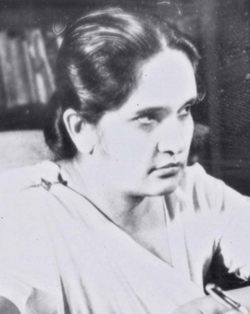
About Sirimavo Bandaranaike
Sirima Ratwatte Dias Bandaranaike (née Ratwatte; 17 April 1916 – 10 October 2000), commonly known as Sirimavo Bandaranaike, was a Sri Lankan stateswoman, who thrice served as Prime Minister of Sri Lanka from 1960 to 1965, from 1970 to 1977, and from 1994 to 2000. She was the first woman in the world to be elected prime minister in 1960. She served as the chairperson of the Sri Lanka Freedom Party (SLFP) from 1960 to 1994. She was the wife of S. W. R. D. Bandaranaike (the fourth Prime Minister of Ceylon), and the mother of Chandrika Kumaratunga, (the fifth President of Sri Lanka), Anura Bandaranaike (the 16th Speaker of the Parliament), and Sunethra Bandaranaike. Her cumulative tenure of 17 years and 211 days, makes her the longest-serving prime minister in Sri Lankan history. Born into a Sinhalese Kandyan aristocratic family, Bandaranaike was educated in Anglican, English-medium schools, but remained a Buddhist, and spoke Sinhala as well as English. As a hostess for her husband S. W. R. D. Bandaranaike, who founded the socialist SLFP in 1951 and became prime minister in 1956, she became an informal advisor, and focused on improving the lives of women and girls in rural areas of Sri Lanka. Following her husband's assassination in 1959, she was persuaded by the party leadership to join active politics and succeed her late husband as chairwoman, and returned her party to government by defeating prime minister Dudley Senanayake's UNP in the July 1960 election. Her opponents dubbed her as the "Weeping Widow". As a result of her election victory, the British Press coined the term "stateswoman" as they could not use "statesman". She was then unseated by Senanayake in the 1965 election and became Leader of the Opposition, before winning a large majority in 1970 due to a cleverly structured election alliance with rival Marxist parties. Bandaranaike attempted to reform the former Dominion of Ceylon into a socialist republic by nationalising organisations in the banking, education, industry, media and trade sectors. Changing the administrative language from English to Sinhala and routinely campaigning on Sinhalese nationalist and anti-Tamil policies exacerbated discontent among the native Tamil population, and with the estate Tamils, who had become stateless under the Citizenship Act of 1948. During Bandaranaike's first two terms as prime minister the country experienced high unemployment, inflation and taxes, and became dependent on food imports, although it also oversaw land reform. Surviving an attempted coup d'état in 1962, as well as a 1971 insurrection of radical youths, in 1972 she oversaw the drafting of a new constitution and the formation of the Sri Lankan republic, separating it from the British Empire. In 1975, Bandaranaike created what would eventually become the Sri Lankan Ministry of Women and Child Affairs, and played a large role abroad as a negotiator and a leader among the Non-Aligned Nations. After losing against J. R. Jayewardene in a landslide in the 1977 election, Bandaranaike was stripped of her civil rights in 1980 for claimed abuses of power during her tenure and barred from government for seven years. The new government initially improved the domestic economy, but failed to address social issues, and led the country into a protracted civil war against Tamil militants, which escalated in brutality, especially when the Indian Peace Keeping Force intervened. Bandaranaike opposed the Indian intervention, believing it violated Sri Lankan sovereignty. Failing to win the office of President against new UNP leader Ranasinghe Premadasa in 1988, she restored her party, which had by now developed more centrist policies and advocated for a reconciliatory approach towards Tamils in the civil war, as a relevant force in the first parliamentary election after 12 years and served a second time as Leader of the Opposition from 1989 to 1994. When her daughter Chandrika Kumaratunga, who succeeded her as party leader, won the 1994 presidential election, Bandaranaike was appointed to her third term as prime minister and served until her retirement in 2000, two months prior to her death.
Biography source: Wikipedia. The profile adds birthday-specific historical context from the Celebs Birthday Today editorial database.