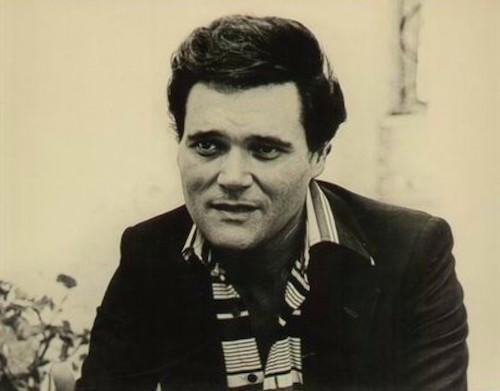
About Waldo de los Ríos
Osvaldo Nicolás Ferraro Gutiérrez (7 September 1934 – 28 March 1977), better known as Waldo de los Ríos, was an Argentine composer, conductor and arranger. == Life and career == De los Ríos was born in Buenos Aires into a musical family; his father was a musician and his mother a well known folk singer; he studied composition and arranging at the National Conservatory of Music under Alberto Ginastera, Teodoro Fuchs, and Lita Spena. He was inspired by an eclectic range of music and formed a musical group called "The Waldos" which crossed folk music with electronic sounds. De los Ríos turned to work in cinema and film sound tracks where his compositions were heard in the 1967 film Savage Pampas, for which he received a prestigious award from the Argentine Academy of Cinematography Arts and Sciences. He relocated to the US in 1958 and then to Spain in 1962. He is best remembered for his ability to transform European classical music into pop music. His 1971 arrangement of Mozart's Symphony No. 40, recorded with the Manuel de Falla orchestra, reached the top spot in the Dutch charts and scored a top 10 hit in several other European countries. (In the U.S. it peaked at #67 on the Billboard charts, released through United Artists Records.) In 1970, prior to this success, Waldo de los Ríos had already climbed the charts around Europe and America with Ludwig van Beethoven's Ode To Joy, which he arranged and conducted for Miguel Ríos "Song of Joy". His record Mozart in the Seventies rearranged famous Mozart pieces in a contemporary style, with a large percussion section.
Biography source: Wikipedia. The profile adds birthday-specific historical context from the Celebs Birthday Today editorial database.