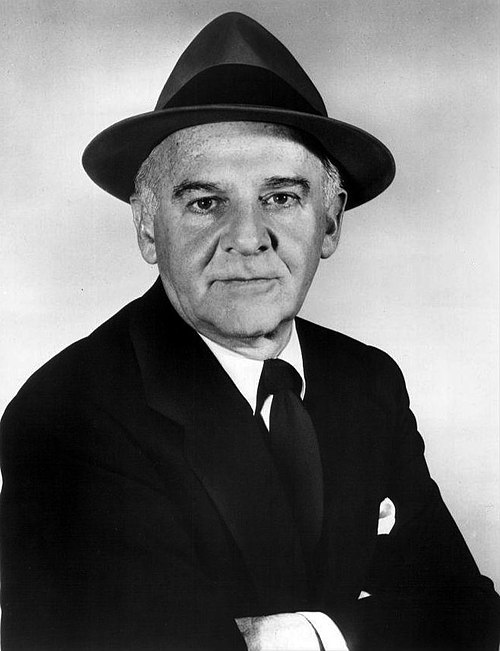
About Walter Winchell
Walter Winchell (April 7, 1897 – February 20, 1972) was an American syndicated newspaper gossip columnist and radio news commentator. Originally a vaudeville performer, Winchell began his newspaper career as a Broadway reporter, critic and columnist for New York tabloids. He rose to national celebrity in the 1930s with Hearst newspaper chain syndication and a popular radio program. He was known for an innovative style of gossipy staccato news briefs, jokes, and Jazz Age slang. Biographer Neal Gabler said that his popularity and influence "turned journalism into a form of entertainment". He uncovered both hard news and embarrassing stories about famous people by exploiting his exceptionally wide circle of contacts, first in the entertainment world and the Prohibition era underworld, then in law enforcement and politics. He was known for trading gossip, sometimes in return for his silence. His outspoken style made him both feared and admired. Novels and movies were based on his wisecracking gossip columnist persona, as early as the play and film Blessed Event in 1932. As World War II approached in the 1930s, he attacked the appeasers of Nazism, then in the 1950s aligned with Senator Joseph McCarthy in his campaign against Communists, including McCarthy's quest to identify Communists in the entertainment industry. He damaged the reputation of Josephine Baker as well as others who had earned his enmity. Over the years he appeared in more than two dozen films and television productions as an actor, sometimes playing himself. Winchell became known for his attempts to destroy the careers of his political and personal enemies as his own career progressed, especially after World War II. He was hired on June 10, 1929, by the New York Daily Mirror, where he became the author of the first syndicated gossip column, On-Broadway.
Biography source: Wikipedia. The profile adds birthday-specific historical context from the Celebs Birthday Today editorial database.